The Things We Dare Not Question
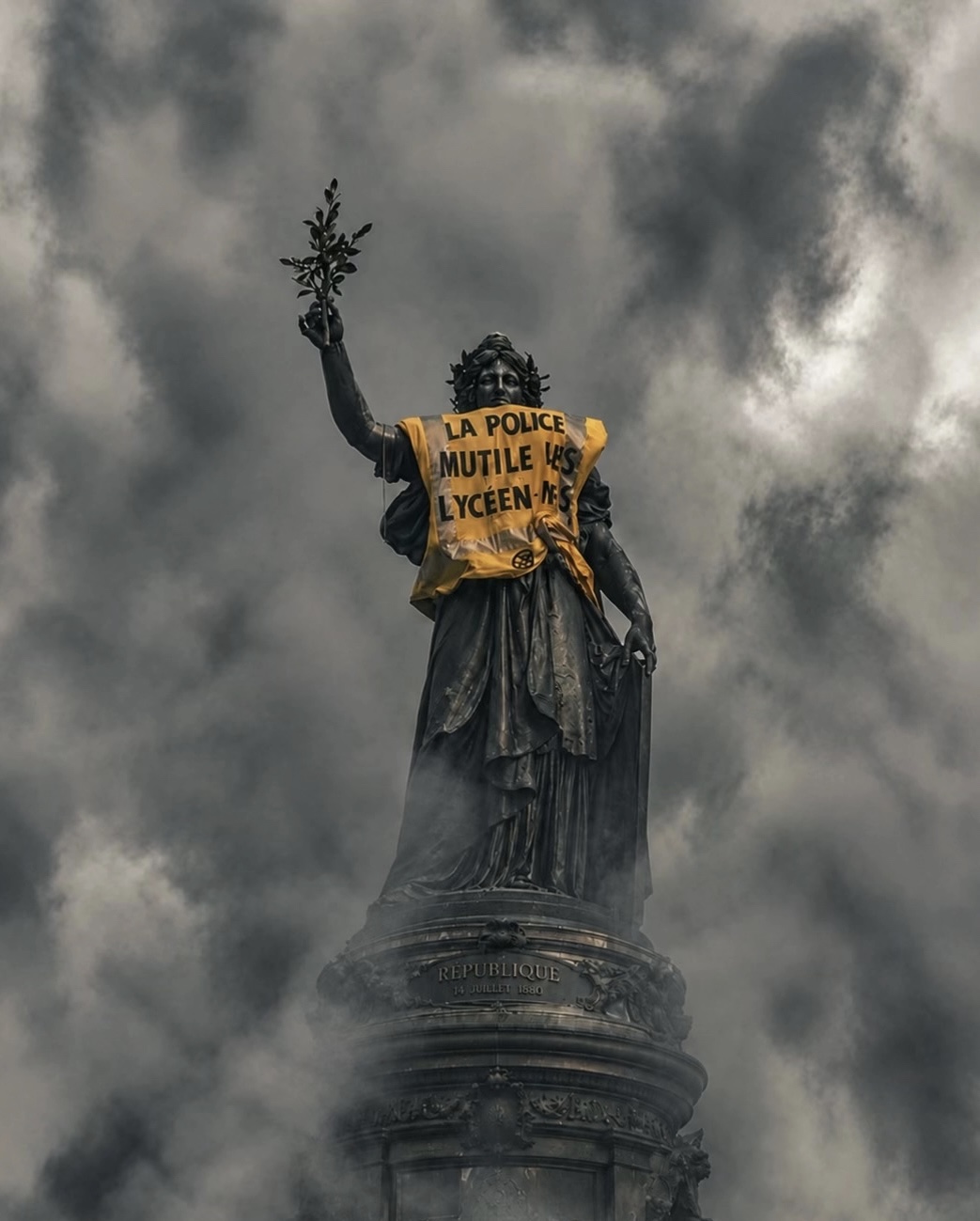
Note: “La police mutile les lycéens” means “The police are maiming high school students” in French.
"When public institutions fail the people they serve, who should hold them accountable?"
In recent weeks, we have been confronted with news of ongoing demonstrations across numerous towns and cities in France (The New York Times, 2026). These demonstrations began with students protesting against poor study conditions caused by underfunding in schools, especially in disadvantaged neighbourhoods. Some schools reportedly lack basic furniture, such as desks and chairs to study on, while others face severe teacher shortages that leave students going months without a French teacher before their final examination.
France’s history of revolutions offers a striking contrast to Malaysia’s cultural emphasis on hierarchical relationships. Hofstede’s cultural dimensions framework identifies Malaysia as a high power distance society, suggesting a greater acceptance of unequal power relations (Hofstede, n.d.). In this context, questioning authority may be perceived as an act of defiance rather than a legitimate demand for accountability.
This tendency can be seen in the recent online backlash directed at a university student after questioning fundraising campaign for a former politician (The South China Morning Post, 2026). The student faced harsh criticism for being “impolite”, with the controversy escalating to calls for their expulsion from university (The New Straits Times, 2026b).
But when did questioning authority become synonymous with disrespect? Like other members of a democratic society, students should be able to scrutinise those in positions of power and question decisions that affect the public. With the Prime Minister proposing to repeal the Universities and University Colleges Act 1971 (AUKU), Malaysia has an opportunity to reaffirm the role of universities as spaces for open debate and civic participation (The New Straits Times, 2026a). Criticism, provided it is grounded in evidence and expressed in good faith, is essential to ensure that public institutions remain responsive to the people they serve.
When criticism is dismissed, public frustration can grow until taking to the streets becomes the only way to demand attention. Should accountability only come when people take to the streets, or should public institutions be willing to listen before grievances reach that point?
References
Geert Hofstede (n.d.) ‘Country comparison graphs’. Geert Hofstede. Available at: geerthofstede.com (Accessed: 21 October 2026).
The New Straits Times (2026a) ‘Explainer: What abolishing AUKU means for universities’. New Straits Times, August. Available at: nst.com.my (Accessed: 21 October 2026).
The New Straits Times (2026b) ‘UM student who questioned Najib donations faces online harassment’. New Straits Times, October. Available at: nst.com.my (Accessed: 21 October 2026).
The New York Times (2026) ‘Article on French student protests and a slogan’. The New York Times, 20 October. Available at: nytimes.com (Accessed: 21 October 2026).
The South China Morning Post (2026) ‘Malaysian student who called out Najib’s donation drive fires back at trolls’. South China Morning Post, 20 October. Available at: scmp.com (Accessed: 21 October 2026).